Regulatory Integration of Safeguards in Member-Based Progressive Prize Networks
Otto Wagner · Oct 10, 2026

Regulatory Integration of Safeguards in Member-Based Progressive Prize Networks
Progressive prize systems tied to club membership have expanded across authorized digital platforms, where contributions from participant pools build cumulative awards while regulatory bodies enforce layered safeguards. These frameworks require operators to embed verification protocols, spending controls, and access restrictions directly into enrollment processes so that prize growth remains tied to compliant activity. Data from multiple jurisdictions shows membership structures often accelerate prize escalation because repeated engagement from verified accounts feeds the progressive pools, yet oversight agencies mandate that each layer of growth includes built-in protections against excessive play.
Core Components of Membership-Driven Progressives
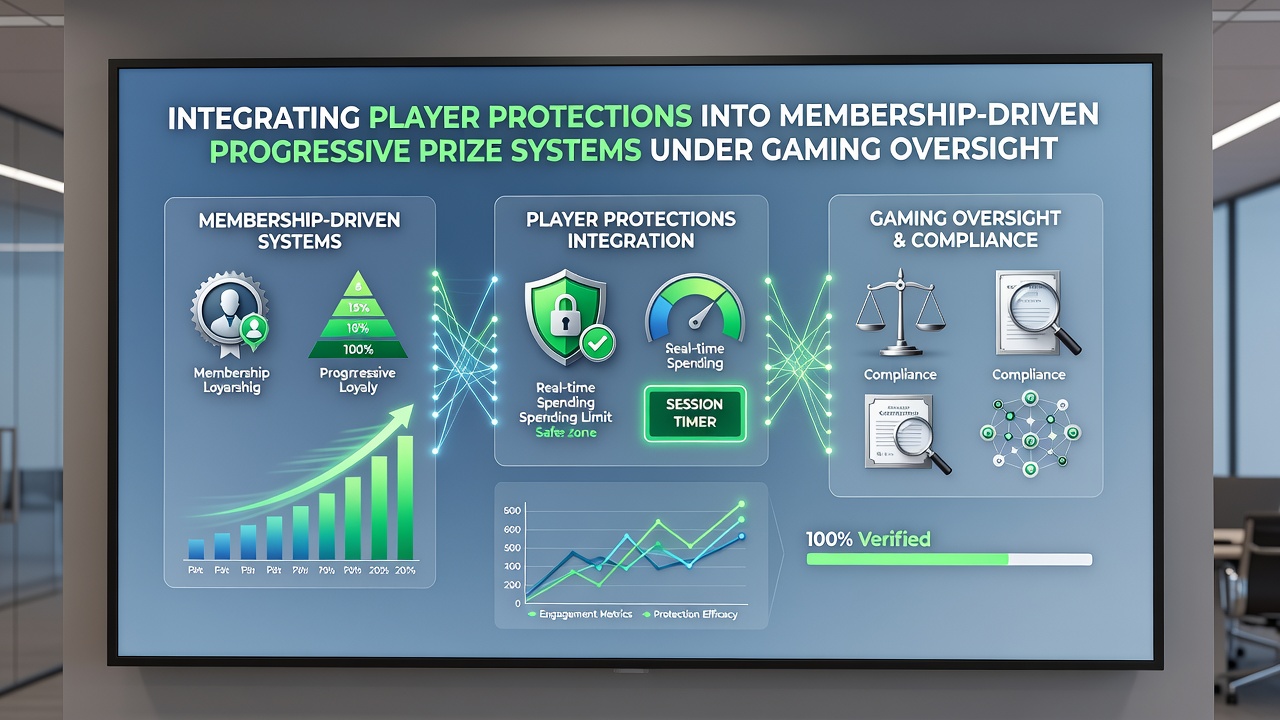
Membership enrollment typically serves as the gateway to prize networks, where participants join through identity checks that link accounts to real-world details and allow ongoing monitoring of contribution patterns. Regulatory standards in several regions require operators to synchronize these enrollment steps with automated tools that flag irregular activity, such as rapid deposit sequences or extended session lengths, before any additional prize increments occur. Observers note that this synchronization prevents unchecked accumulation while still permitting the collective contributions that drive larger awards.
Systems often incorporate tiered membership levels, each granting different access to progressive pools, yet every tier operates under uniform rules for limit setting and exclusion requests. Research from gaming authorities indicates that these graduated structures help distribute prize growth across broader participant bases, which in turn reduces concentration risks around a small number of high-volume accounts. Figures released in October 2026 by North American regulators highlighted how membership tiers, when paired with mandatory cooling-off prompts, maintained prize momentum without corresponding rises in problem gambling indicators.
Player Protection Mechanisms Embedded in Oversight Rules
Gaming oversight bodies require real-time integration of self-exclusion lists into membership databases so that excluded individuals cannot contribute to or claim from progressive systems even after joining multiple clubs. Verification standards extend beyond initial signup to include periodic rechecks that confirm continued eligibility and allow immediate suspension if new restrictions apply. Those who've studied these protocols find that automated cross-referencing with national databases reduces instances of unauthorized participation while preserving the integrity of prize calculations.
Spending caps tied to membership status form another layer, where operators must adjust individual limits based on account history and regulatory thresholds rather than allowing unlimited accumulation. Canadian provincial agencies, including the Alcohol and Gaming Commission of Ontario, have documented cases where such caps, enforced through membership profiles, kept aggregate contributions within approved ranges even as progressive totals climbed. Similar approaches appear in Australian state frameworks, where operators link prize eligibility to verified responsible gaming modules that pause contributions once thresholds are reached.
Regional Variations in Implementation
United States state regulators, such as the Nevada Gaming Control Board, have issued updated compliance checklists that tie progressive system approvals to demonstrated integration of protection features at the membership level. These checklists require evidence that prize escalation algorithms pause automatically when member accounts trigger risk alerts, ensuring collective growth does not override individual safeguards. European authorities operating under the Malta Gaming Authority have adopted comparable requirements, focusing on data portability so members can carry their protection settings across licensed platforms without resetting limits.
Industry reports from the American Gaming Association note that membership networks spanning multiple jurisdictions benefit when operators adopt unified verification standards, because this reduces duplication while maintaining consistent oversight across borders. One study revealed that platforms implementing shared exclusion registries experienced fewer compliance incidents during prize distribution events, as the systems automatically blocked ineligible accounts from accessing growing pools.
Technical Synchronization of Protections and Prize Growth
Technical architectures now link membership databases directly to prize calculation engines so that every contribution triggers simultaneous checks against protection parameters. This approach allows prize totals to rise steadily while contribution streams from restricted accounts are diverted or halted without disrupting the overall network. Regulators in multiple regions have observed that such synchronization supports larger cumulative awards because verified, compliant membership bases provide stable, long-term input rather than volatile short-term spikes.
Operators must also maintain audit trails that document how protection rules interacted with each prize increment, creating records that oversight agencies review during periodic evaluations. These trails help confirm that membership-driven growth occurred only through channels that respected all active limits and exclusions.
Conclusion
Integration of player protections into membership-driven progressive prize systems continues to evolve under coordinated gaming oversight, with verification, limits, and exclusion tools operating as core elements of prize network design. Regional authorities maintain distinct yet overlapping standards that emphasize real-time compliance during contribution and distribution phases. Data from October 2026 and earlier periods demonstrates that these combined approaches support prize escalation while enforcing boundaries that protect individual participants across expanding digital platforms.